Last updated November 23, 2026
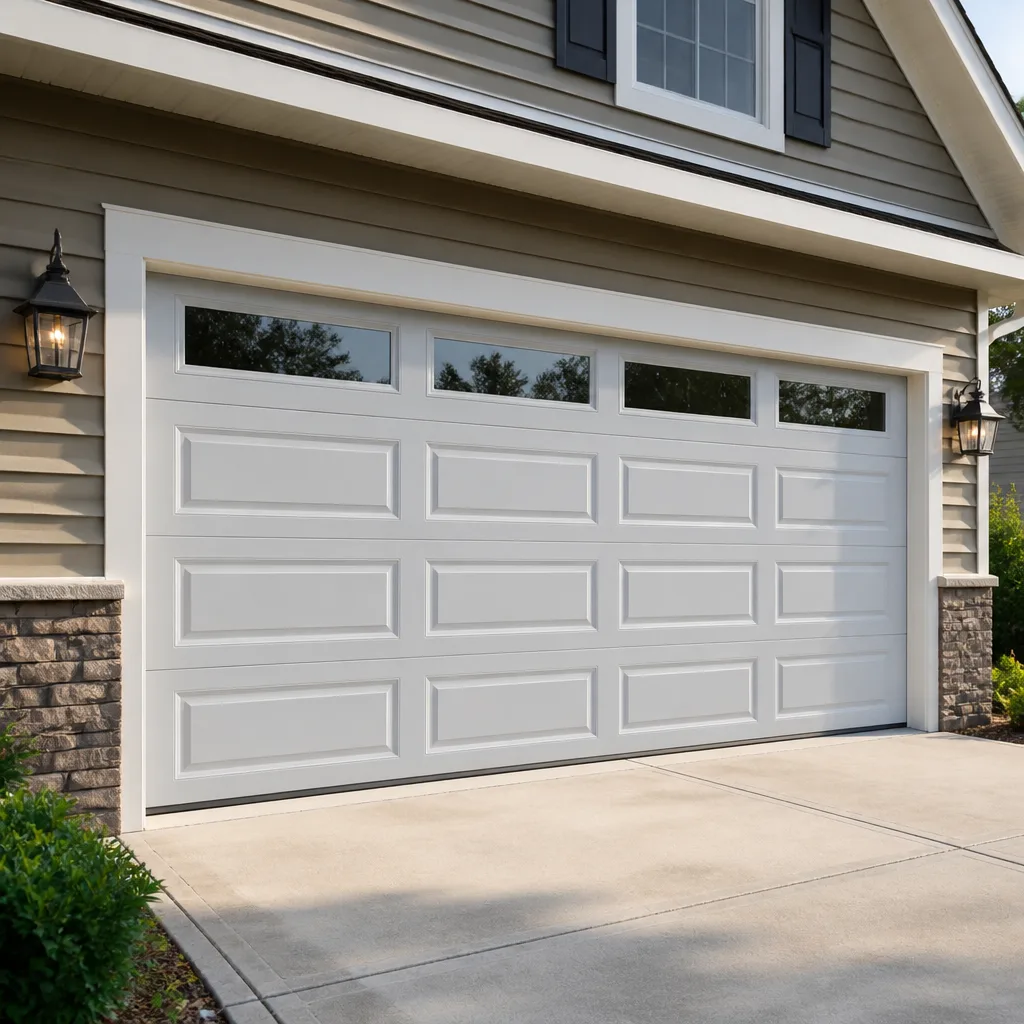 Raised-panel steel
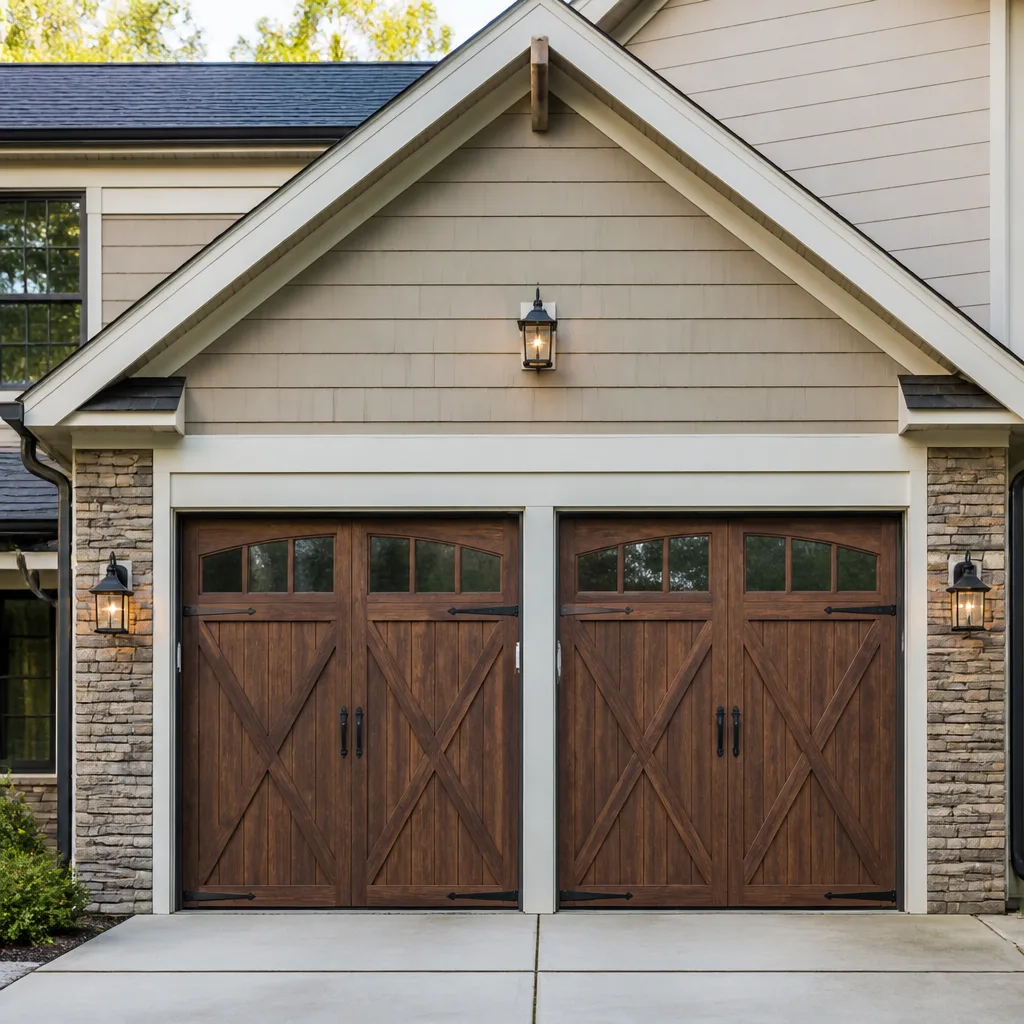 Carriage house
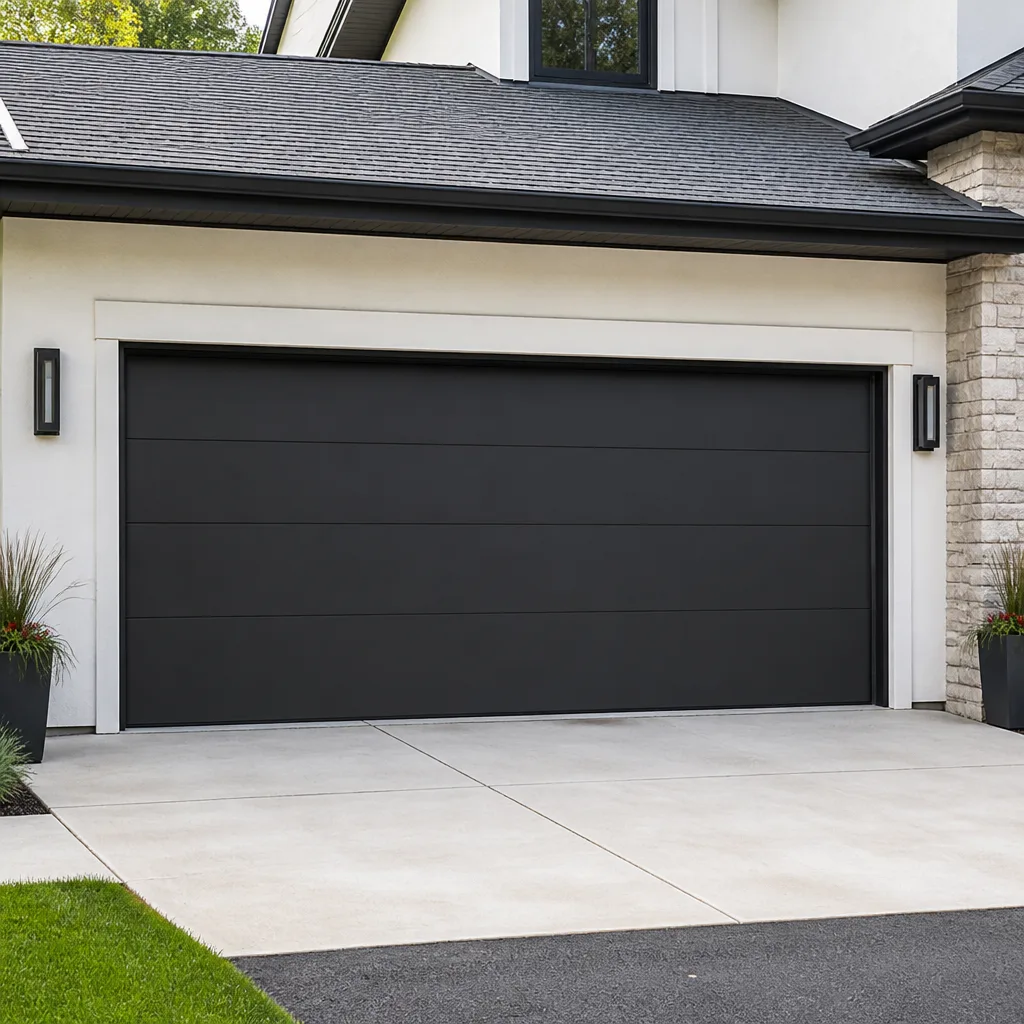 Modern flush
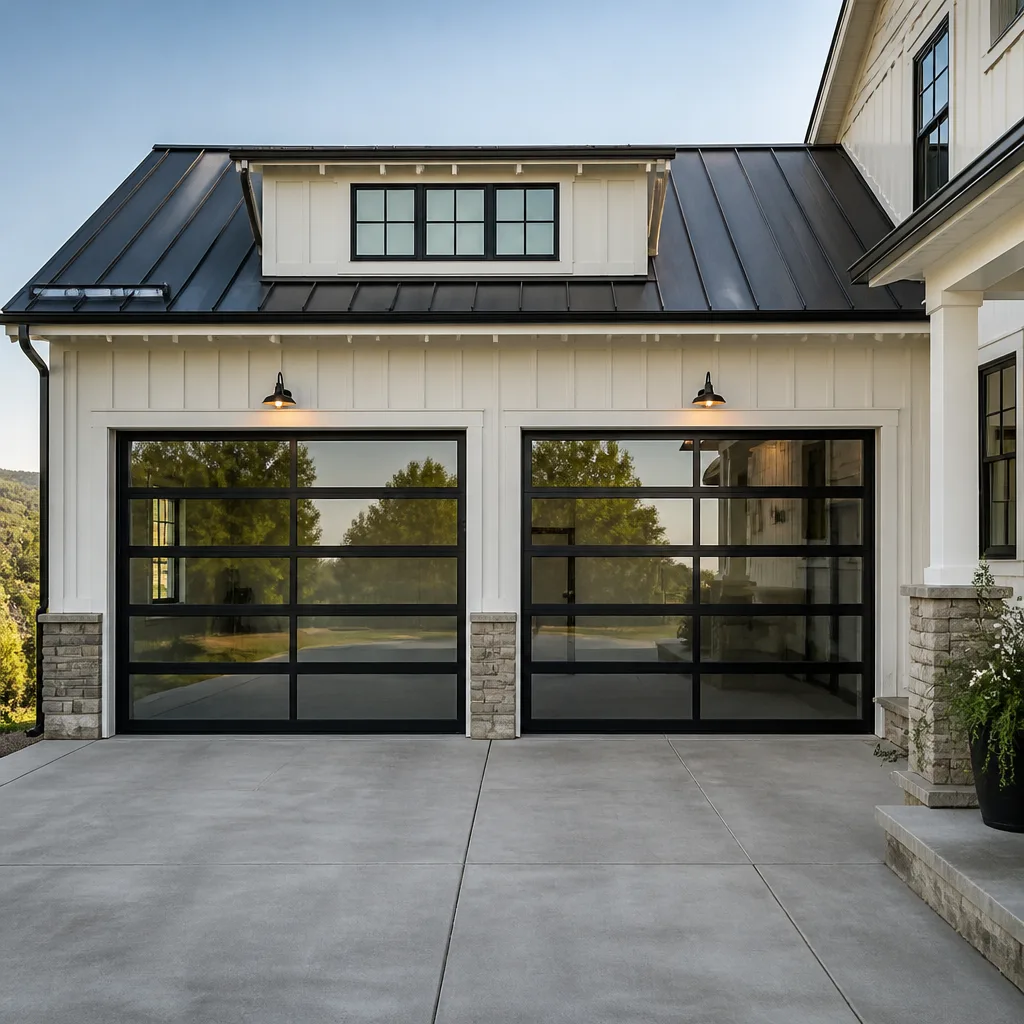 Full-view glass
 LiftMaster openers
 Chamberlain openers
Full 25-point door and opener safety check with every visit - springs, cables, rollers, tracks, and your LiftMaster or Chamberlain opener included
You get a price before we start. It does not change when the pro arrives.
Get your free estimateThe Complete Guide to Garage Doors in Commerce City
Most garage door guides are national content with a city name dropped into the title, and you can feel it after the first paragraph. They talk about “seasonal maintenance” and “calling a pro” without ever mentioning that Commerce City sits on some of the most active clay soil on the Front Range, that our wind doesn’t behave like Denver’s, or that a builder-grade door in a Reunion subdivision was specified differently than a 1970s door over in Welby. Those details are the whole game when your door quits working. This guide covers how doors actually fail here, what the local housing stock looks like from a garage-door perspective, how permitting works across Adams County and Commerce City, and what a realistic repair timeline looks like when you call a local provider rather than a national dispatch line.
Quick Answer
Garage door problems in Commerce City usually trace back to three local conditions: expansive clay soil that shifts foundations and racks the door out of alignment, persistent high-plains wind that stresses rollers, hinges and panels, and housing stock that ranges from tight post-2000 three-car garages to older single-bay doors with limited headroom. Most repair calls – broken springs, off-track doors, openers that stopped responding – can be handled same-day by a local technician, while a full replacement is a scheduled job measured and ordered in advance. Call (855) 337-1961 for a free estimate before authorizing any work.
Styles & brands we work with
- Raised-panel steel
- Carriage house
- Modern flush
- Full-view glass
- LiftMaster openers
- Chamberlain openers
Table of Contents
- How Commerce City’s Housing Stock Shapes Your Garage Door
- Why Commerce City’s Clay Soil Wrecks Door Alignment
- Wind-Load Ratings and the I-76 / E-470 Corridor
- Permits: Adams County vs. Commerce City Requirements
- Springs, Cables and the Parts You Should Never Touch
- Openers: Legacy Units, Smart Openers and Brand Fluency
- A Realistic Service Timeline in Commerce City
- Seasonal Maintenance That Actually Matters Here
How Commerce City’s Housing Stock Shapes Your Garage Door
Commerce City isn’t one housing market. It’s at least three, and each one brings a different set of garage door constraints. Knowing which one you live in tells a technician more in the first five minutes than any diagnostic tool.
In the newer subdivisions – Reunion, Buffalo Run, Turnberry and the parcels filling in along the eastern edge – the dominant layout is a three-car attached garage with a double door and a single door. These builds typically use 16-foot and 8-foot or 9-foot sectional doors. They’re tall enough for most vehicles but the ceilings are often tight, which matters when you’re replacing an opener or upgrading to a belt-drive unit with a rail that needs clearance. Headroom is the constraint most homeowners don’t think about until the new opener doesn’t fit.
The older neighborhoods, particularly around Welby and the original Commerce City core, have a very different profile. Single-bay garages are common. So are non-standard door widths that predate current sizing conventions, which means replacement panels often have to be ordered rather than pulled from a standard stock size. Low headroom is the norm, not the exception, and a technician who doesn’t check clearance before quoting an install is setting up a callback.
In between are the 1980s and 1990s builds with standard 16-by-7 doors that have been through thirty-plus years of use. These are the doors most likely to need full replacement rather than repair, because the panels have started to delaminate and the hardware has reached the end of its service life. Our technicians have up to 15 years of experience reading these differences quickly, which is why we always measure and inspect before quoting a number. For a full replacement, see garage door installation.
What to Check on Your Own Door
- Measure your door width and height at the opening, not the panel.
- Note the ceiling height in the garage – anything under about 12 inches of clearance above the door changes your opener options.
- Look at the bottom seal for gaps and the panels for dents or separation.
- Write down the make and model of your opener if there’s a label on the back of the motor housing.
Why Commerce City’s Clay Soil Wrecks Door Alignment
Commerce City sits on expansive clay soils that swell when wet and shrink when dry, and that movement doesn’t stay in the ground. As the slab and foundation shift through the wet and dry cycles of a high-plains year, the garage structure moves with it. The door hangs from the tracks, the tracks are bolted to the framing, and the framing moves. That’s when a door that worked fine in the fall starts scraping the jamb in the spring.
This is the single biggest difference between garage door service here and in sandier Front Range cities. Down in areas with more porous, sandy soils, the ground moves less, and tracks stay true for longer. In Commerce City, we see track misalignment much earlier in a door’s life. The symptoms are predictable:
- The door scrapes, grinds or rubs on one side as it travels.
- The gap between the door and the weather seal is uneven – one corner sits tighter than the other.
- Rollers wear out on one side faster than the other.
- The door binds partway up and reverses or strains.
- A hinge or bracket pulls loose from the wall.
None of these are cosmetic. A door that’s out of alignment puts extra load on the opener, the springs, and the hinges, and that load accelerates wear on everything else. Catching a track misalignment early is one of the cheapest repairs you can make. Waiting until the door won’t close is one of the most expensive. That’s why we treat garage door repair as a diagnostic service first – we find out why the door drifted before we re-hang it.
Signs Your Tracks Have Shifted
- Run the door up about halfway and stop it. Look at the gap between the door edge and the track on both sides – they should be even.
- Check that the horizontal and vertical tracks meet at a clean angle with no visible bend at the joint.
- Push gently on the bottom corner of a closed door. If it flexes more than a fraction of an inch, the track or bracket is loose.
If any of those checks fail, the fix is not to bend the track back by hand. Call for an inspection and we’ll re-set the track properly.
Wind-Load Ratings and the I-76 / E-470 Corridor
Wind-load rating is a spec most homeowners in Denver and the protected neighborhoods never have to think about. Along the I-76 and E-470 corridor in Commerce City, it matters. The industrial traffic and the open ground to the north and east combine with the high-plains geography to produce gusts that push a garage door from the wrong direction, and a door engineered for a lower wind pressure can flex, bow, or fail under sustained load.
When you’re choosing a new door – or wondering why your current one shakes and rattles on a windy day – the wind-load rating is one of the numbers to ask about. Standard residential doors are rated for a baseline wind pressure. Doors built for exposed sites are rated higher, with heavier hinges, additional struts across the panels, and reinforced bottom brackets. If your garage faces an open field or sits near the highway, that higher rating is worth specifying.
The telltale signs that wind is loading your door harder than it was built for:
- The door panel bows inward when the wind gusts.
- Rattling and vibration that you can hear from inside the house.
- Repeated roller or hinge failures on the same door.
- A weather seal that gets pulled away at the corners.
This is one area where buying from a manufacturer with a range of door series matters. Brands like Clopay and Amarr build tiers of doors that include reinforced models for higher wind exposures, and a technician who knows the product lines can match the door to the site rather than selling the same door everywhere. If you’ve noticed your door struggling in the wind, the solution isn’t more weatherstripping. It’s reinforcement or replacement, and we’ll tell you which.
Permits: Adams County vs. Commerce City Requirements
Permitting is one of the details that catches homeowners off guard, and it’s worth understanding because it affects the timeline and the paperwork on any replacement job.
Commerce City sits within Adams County, and permit jurisdiction depends on what you’re doing and where exactly you are. The general rule for garage door work is straightforward:
- Repair and opener work – spring replacement, track realignment, opener replacement, cable and roller work – is normally handled without a permit. It’s maintenance on an existing element of a structure.
- Replacement of a door in the same opening – same size, same type – is often a permit-free swap, but it depends on the jurisdiction and the specific scope.
- Structural changes – enlarging an opening, altering the header or supporting wall, converting a garage or changing the door type to something different from what was approved – almost certainly requires a permit.
The right move before any replacement or structural change is to call your city’s building department and describe exactly what’s going in and out. There is no substitute for that confirmation. What a general guide can tell you is which questions to ask: Does this replacement require a permit? Does the door need to meet a wind-load or safety standard for the code cycle it’s inspected under? Are there setbacks or structural constraints specific to my lot?
Commerce City’s building department will answer these directly. The point of asking isn’t to slow down your project – it’s that an inspector who sees a compliant install signs off, and an inspector who sees an unpermitted structural change can make you undo it. If you’re working with us on a replacement, we’ll walk you through what to ask before anything is ordered.
Springs, Cables and the Parts You Should Never Touch
High-tension torsion springs and the cables that run alongside them are the most dangerous components on any garage door. They store enough energy to lift the door and enough energy to cause serious injury if they release under load. This is a repair where a trained technician, using the correct winding bars and a controlled procedure, is the only safe route. A general handyman shouldn’t touch them, and neither should you.
Springs fail in a predictable way and with a predictable sound – a loud bang followed by a door that suddenly weighs 200 pounds and won’t open. In Commerce City, the failure pattern is concentrated in the transition seasons. The freeze-thaw cycles of a high-plains winter and the drying heat of summer work the spring through thousands of expansion and contraction cycles each year, and that’s on top of the normal open-and-close cycle. If your door is going on seven to ten years old, the springs are near the end of their service life even if the door still moves.
Signs the Springs Are Going
- The door is noticeably harder to lift by hand (test this carefully, with the door disengaged and down).
- The door opens a few inches and stops.
- You hear a sharp metallic bang from the garage.
- There’s a visible gap in a spring on the torsion bar.
- The opener strains or the door moves unevenly.
Spring replacement is a service we treat as a dedicated specialty, not an add-on. The safety stakes are too high for anything else. A matched pair of springs is usually replaced together, because springs at the end of their life fail at close to the same cycle count. If one is broken, the other is on borrowed time, and you don’t want to pay for two service calls. Our technicians have up to 15 years of handling these components and will tell you plainly how the job works before they start.
For an urgent situation – a car trapped inside, a door that won’t close at night – that’s what garage door opener repair and emergency service exist for. Call and we’ll book you as fast as the schedule allows, and if a spring has snapped on a Saturday, we can schedule a Sunday visit.
Openers: Legacy Units, Smart Openers and Brand Fluency
Garage door openers tend to sit in the background of a home until they stop working, and then the make and model suddenly matters a lot. Commerce City has both ends of the spectrum: legacy units installed in the 1990s and 2000s that are still going, and modern Wi-Fi-connected openers that pair with a smartphone app and the rest of a smart home.
The two are not serviced the same way. Legacy units, especially the older Craftsman and Genie models, have mechanical and electronic characteristics that a technician recognizes quickly – the capacitor, the logic board, the travel limit switches, the way the chain or screw drive behaves. Newer LiftMaster and Chamberlain units with myQ add app connectivity, wall-panel programming, battery backup, and in some cases camera and sensor features that can fail on their own. A diagnostic visit that doesn’t account for both is a guessing game.
We’re factory-familiar with the eight major brands that dominate Commerce City’s garages: LiftMaster, Chamberlain, Genie, Clopay, Amarr, Wayne Dalton, Craftsman and Raynor. That matters in a repair because it changes how fast we diagnose and how quickly we can source the right part – no cross-referencing a Chevy part into a Ford.
Common Opener Failures and What They Usually Mean
- Opener runs but door doesn’t move. Usually a disengaged trolley, a broken spring, or a snapped cable – the opener is fine, the door isn’t.
- Opener hums but doesn’t move the door. Often a capacitor or a burned-out start relay on a legacy unit.
- Door closes then reopens. Safety sensor issue, track binding, or an obstruction at the bottom seal.
- Remote or wall panel stops responding. Could be programming, a dead battery, or a logic board. The latest units with myQ have app-side troubleshooting that a tech can walk through.
- Door moves in the wrong direction or won’t fully close. Travel limits need adjustment, or the door is out of balance.
One rule of thumb: if the opener is more than 15 years old and has started to fail repeatedly, the money is better spent on a replacement than another repair. An aged opener is on its last legs and the repair cost stacks up.
A Realistic Service Timeline in Commerce City
One of the frustrations homeowners have with national dispatch centers is that the timeline they’re quoted has nothing to do with the local reality. A local provider with a real Commerce City presence can tell you what a given job actually takes.
For repair calls – broken spring, door off track, opener that stopped working, door that won’t close – same-day service is usually realistic when you call early. A spring replacement on a standard door is typically a same-visit job. A track realignment might be a 30-to-90-minute fix once the technician sees what’s happening. An opener replacement is usually under an hour once the unit is on site.
For replacements and new installations, the timeline is different because it involves measurement, ordering and scheduling. The general flow looks like this:
- Call and describe the door and problem. We’ll ask for the make, approximate size, and what’s happening. Photos help.
- On-site measure and inspection. A technician confirms door size, headroom, track condition, opener compatibility, and any structural constraints.
- Written estimate. The price is quoted and agreed before any work starts. This is the number the job runs on.
- Order the door. Non-standard sizes and higher wind-load models take longer to source. Standard sizes move faster.
- Scheduled install. Installation is scheduled once the door is on site. A standard two-car door install is usually a single-day job.
- Final adjustment and hand-off. Springs are tensioned, travel limits set, and the door is tested open and closed.
The gap between what a national line tells you and what a local provider can actually do is often the difference between “we’ll be there sometime” and “we can be there Tuesday morning.” For repair and emergency work we aim for same-day whenever the schedule permits, and we’re transparent when it isn’t.
Seasonal Maintenance That Actually Matters Here
Half the maintenance advice you’ll read online is written for a climate most of the country doesn’t live in, so let’s narrow it to what actually matters in Commerce City.
- Lubricate the moving parts once or twice a year. Rollers, hinges, springs and the opener rail, with a garage-door-rated lubricant. Not WD-40 as a lubricant – it’s a solvent, and it drives out the grease the parts need.
- Look at the tracks after a wet spring and a dry summer. The clay-soil movement shows up in the tracks first. A quick visual check for bends, scraping and misalignment catches a $150 repair before it becomes a $400 one.
- Check the weather seal before winter. A door that gaps at the bottom pulls in cold air and dust, and it lets water in where the clay soil is already moving the foundation. Weather seal replacement is one of the more cost-effective things you can do.
- Test the safety reverse once a month. Put a small object under the door and close it. If it doesn’t reverse, stop using it and call.
- Listen on a windy day. If the door rattles and you can hear the panels flex, the wind-load reinforcement may not be adequate for your site.
- Check the balance yearly. Disengage the opener and lift the door by hand halfway. It should stay roughly where you let go. If it drops or needs force, the springs are weakening.
This is what honest preventive work looks like on a Commerce City door. It doesn’t require a subscription or a plan – just ten minutes, twice a year, and a call when something looks off.
Common Mistakes to Avoid
- Trying to adjust a spring yourself. This is the single most dangerous mistake homeowners make, and the injuries are serious. Springs are a technician-only repair, full stop.
- Ignoring a track that’s drifted. In Commerce City’s clay soil, a small misalignment gets worse every season. Waiting usually costs more than calling early.
- Assuming any door will do for a windy site. Choosing a standard door for an exposed lot near the I-76 corridor can lead to wind-load failures that a reinforced door would have handled without issue.
- Buying an opener before checking headroom. A belt-drive unit that needs 10 inches of clearance above the door doesn’t fit in a garage with 8. Measure first.
- Calling a general handyman for garage door work. Springs, cables and torsion hardware require specific training and specific tools. A general handyman shouldn’t be working on them.
- Skipping the permit call on a replacement. A quick call to Commerce City’s building department before ordering a non-standard door saves you from surprise complications at inspection.
- Using WD-40 as a lubricant. It attracts dust and drives out actual grease. Use a garage-door-rated product on the moving parts.
See the difference
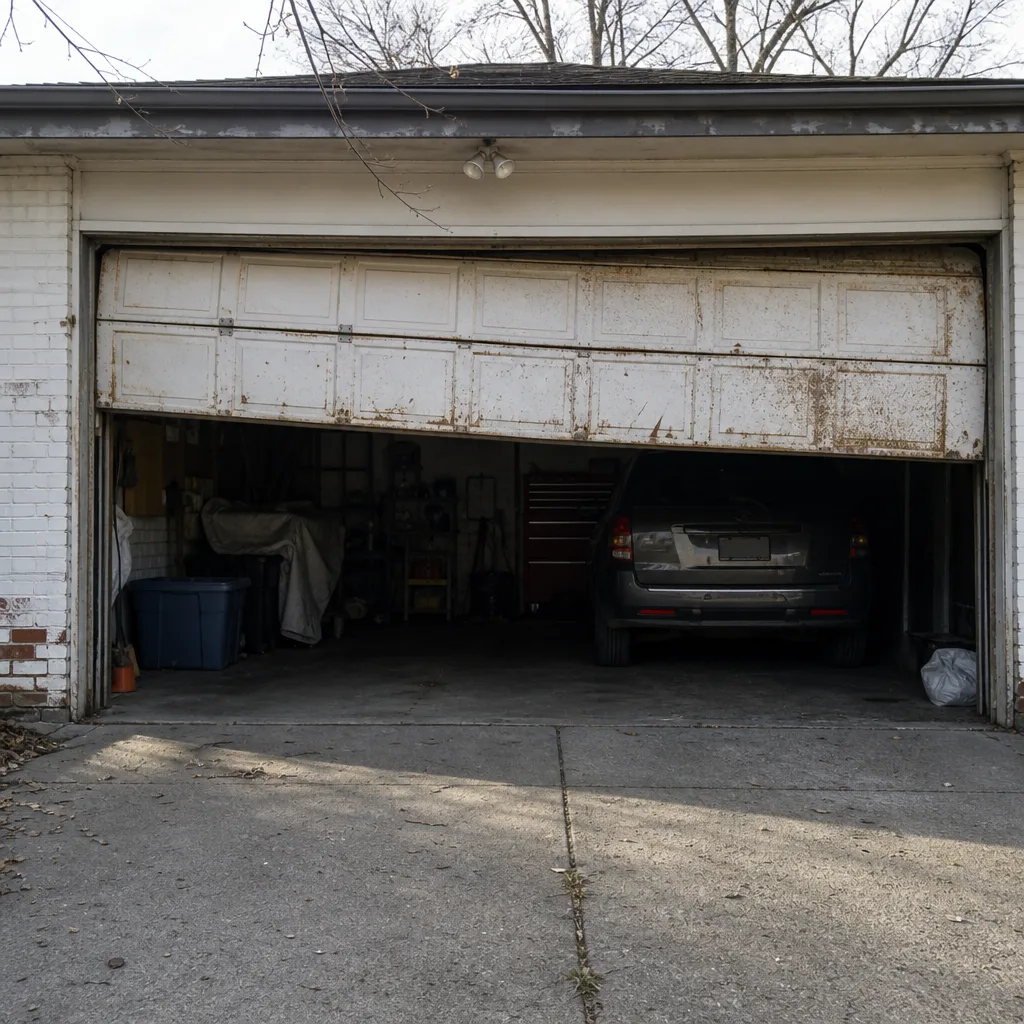 Before
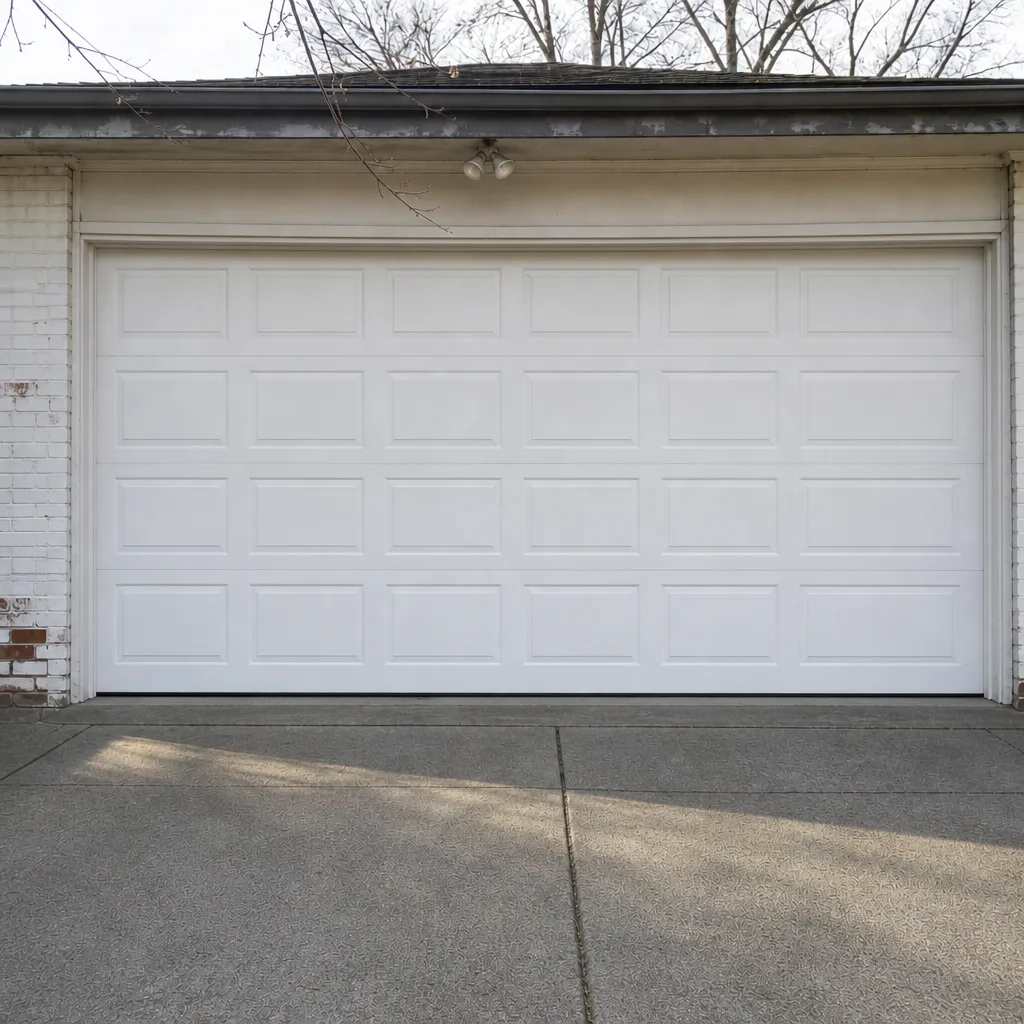 After
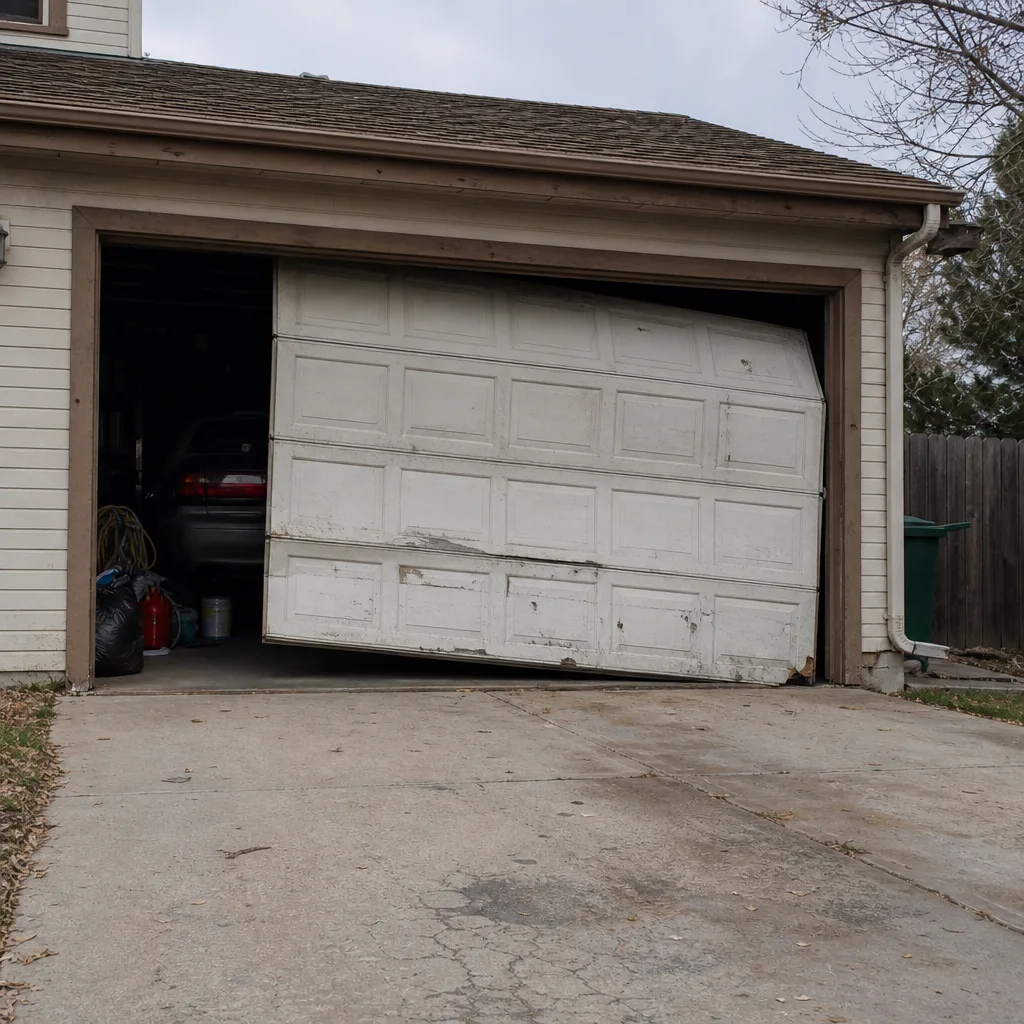 Before
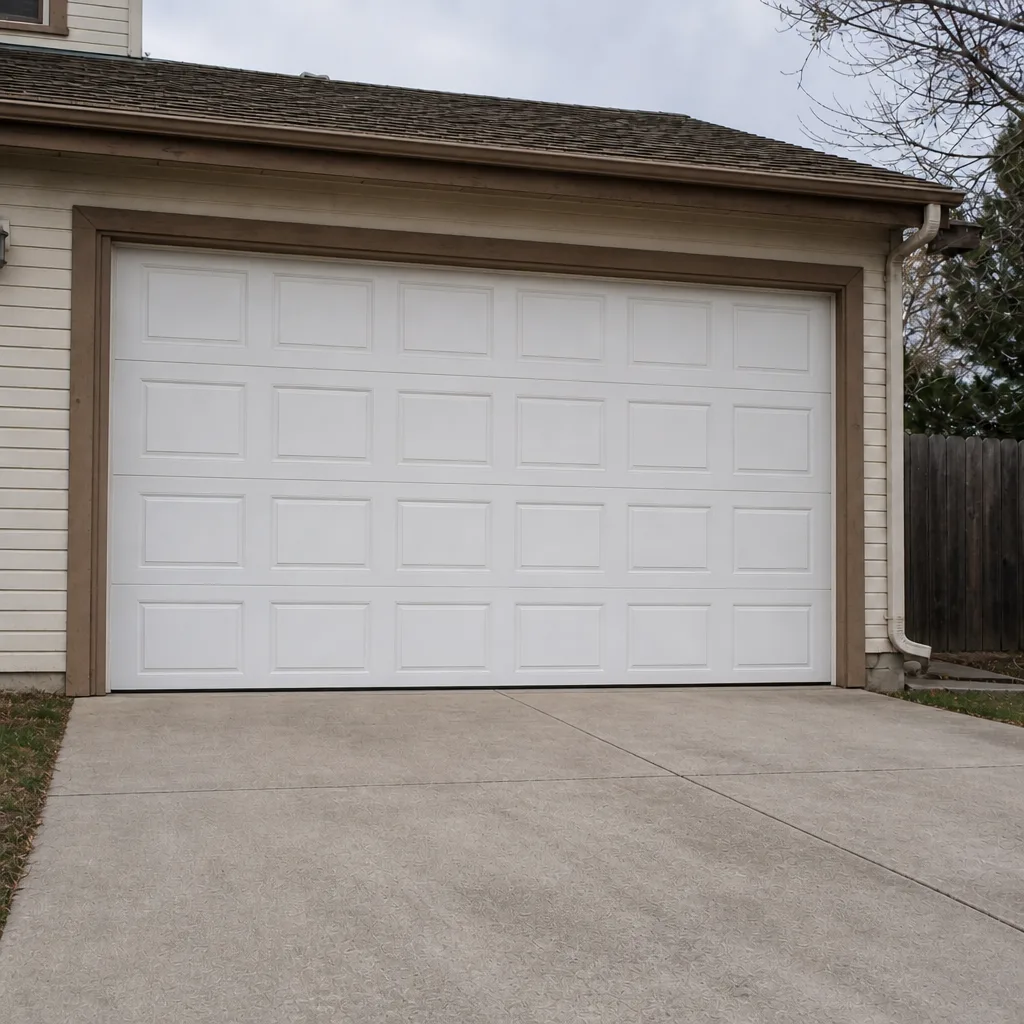 After
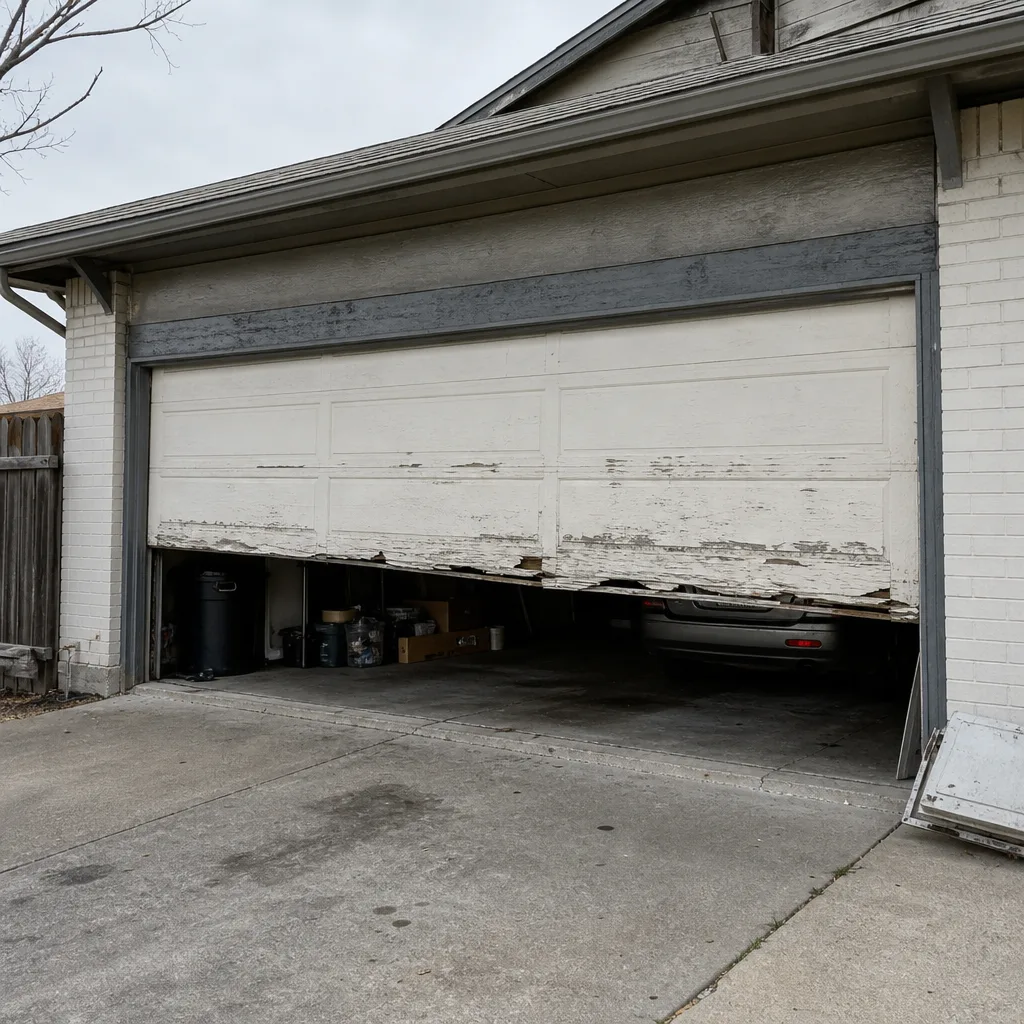 Before
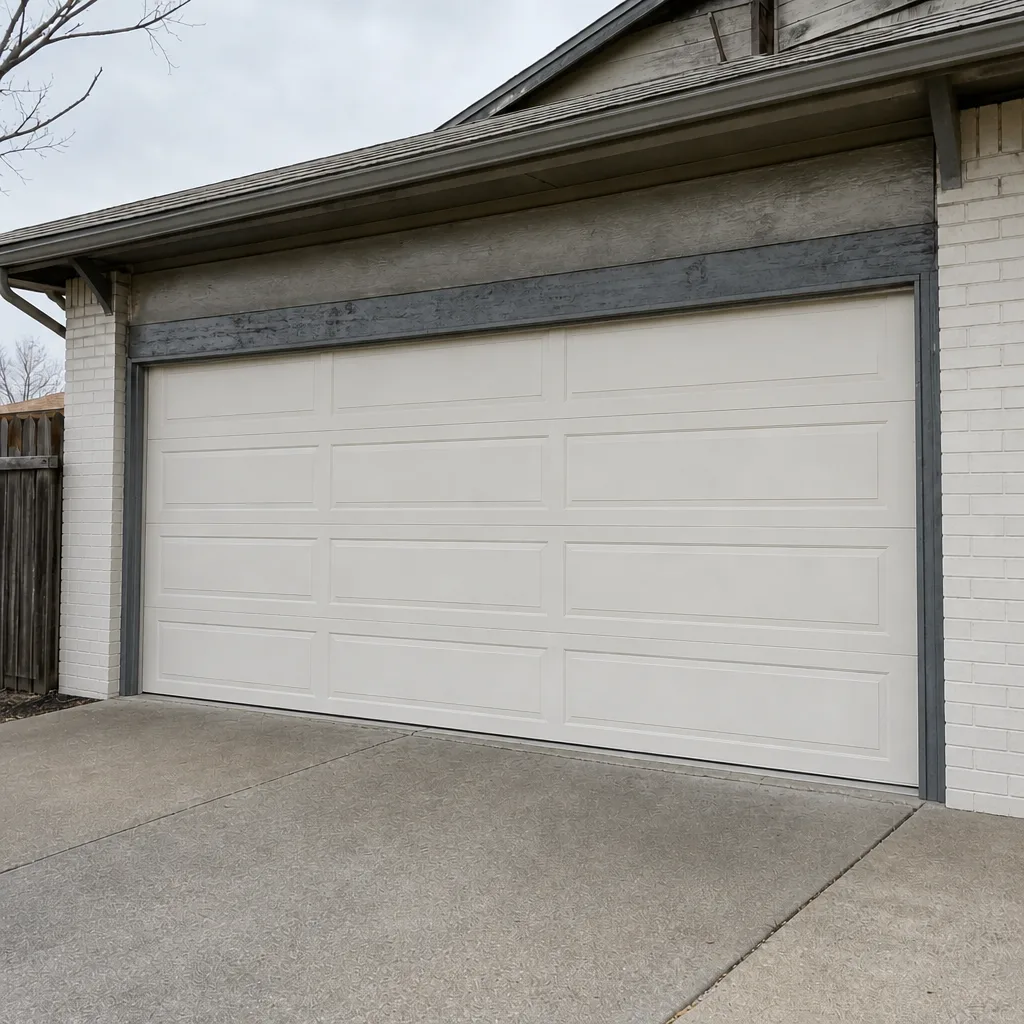 After
When to Call a Professional
Some problems are safe to live with for a week. Others aren’t. Call a professional any time the door won’t respond to the opener, the door is off its track, a spring has snapped, the door won’t close fully, or you hear a bang from the garage and the door suddenly won’t lift. Call immediately if a car is trapped inside, a child or pet is near an unsecured door, or the door is hanging unevenly enough to fall. Don’t try to test a broken door repeatedly – a door held by a single spring can come down hard. For opener issues that don’t involve the door moving dangerously, book a service visit and we’ll diagnose the unit. Commerce City Garage Door Repair Co offers free estimates in Commerce City. Call (855) 337-1961 and describe what’s happening – we’ll tell you if it can wait until morning or if it needs priority service.
Frequently Asked Questions
Spring repair is quoted per spring and depends on the door size and spring type, so there’s no single number. The only number that matters is the written estimate the technician gives you before work starts. A matched pair is usually replaced together when one fails, so ask for both in the quote. Call (855) 337-1961 for a free estimate specific to your door.
For repair and emergency calls we aim for same-day service whenever the schedule allows, and a door that won’t close gets treated as priority. Call early in the day and describe what’s happening – that helps us slot you correctly. If we can’t make it today, we’ll tell you plainly, and we can schedule a Sunday visit if the door fails on a Saturday.
No. The price is quoted and agreed before any work begins, and that quoted number is what the job runs on. If we discover something during the inspection – a bent track, a worn hinge, a cable that needs replacement – we tell you before touching it and let you decide. You won’t get a surprise invoice after the work is done.
The local independent professionals we connect you with are licensed and insured as their state requires, and we confirm that on every job before scheduling. Our technicians have up to 15 years of experience across the major door and opener brands, including LiftMaster, Chamberlain, Genie, Clopay, Amarr, Wayne Dalton, Craftsman and Raynor.
Often not, but it depends on the scope. A same-size replacement in an existing opening is frequently permit-free, while structural changes to the opening or supporting wall almost always require one. Call Commerce City’s building department and describe exactly what’s going in and out – they’ll confirm the specific requirements for your address.
A standard replacement – same size, same type, standard headroom – is usually a single-day job once the door is on site. The lead time before installation depends on the door size and series; standard sizes move faster and non-standard or high-wind-load doors take longer to source. We measure, order, and schedule the install once the door arrives. Call for a free estimate and a timeline for your specific door.
Why does my garage door shake so much on windy days?
That’s usually the wind-load rating of the door being lower than the loading your site actually sees. Doors near the I-76 / E-470 corridor face more sustained gusts than doors in more protected neighborhoods. Reinforcement – additional struts, heavier hinges, a reinforced bottom bracket – or a door series rated for higher wind pressure is the fix. Have us look at it and we’ll tell you which.
The Bottom Line
Garage doors in Commerce City are a different category of job than garage doors in most of the Front Range, and the reasons come down to soil, wind and housing stock. The clay-heavy ground shifts the framing and racks the tracks. The high-plains wind along the I-76 and E-470 corridor demands a door built for the exposure. The housing stock, from post-2000 three-car garages to older Welby-area single-bay doors, dictates what fits and what has to be ordered. Add the Adams County and Commerce City permit questions to the picture, and the case for working with a local provider who knows these variables is clear. Handle the small maintenance yourself – lubricant, seal, safety reverse, balance check – and call a professional the moment springs, cables or alignment are involved. That combination keeps the door operating longer and safer, and it gives you a repaired or replaced door that fits how Commerce City actually lives.
If you’ve got a problem today or you’re planning a replacement, we’re one call away. Commerce City Garage Door Repair Co covers repair, opener service, springs and full installation. Factory-familiar with the major brands, prepared for emergency calls, and committed to upfront pricing you agree to before any work starts. Call Commerce City Garage Door Repair Co at (855) 337-1961 for a free estimate.
Written by the team at Commerce City Garage Door Repair Co.