Last updated November 23, 2026
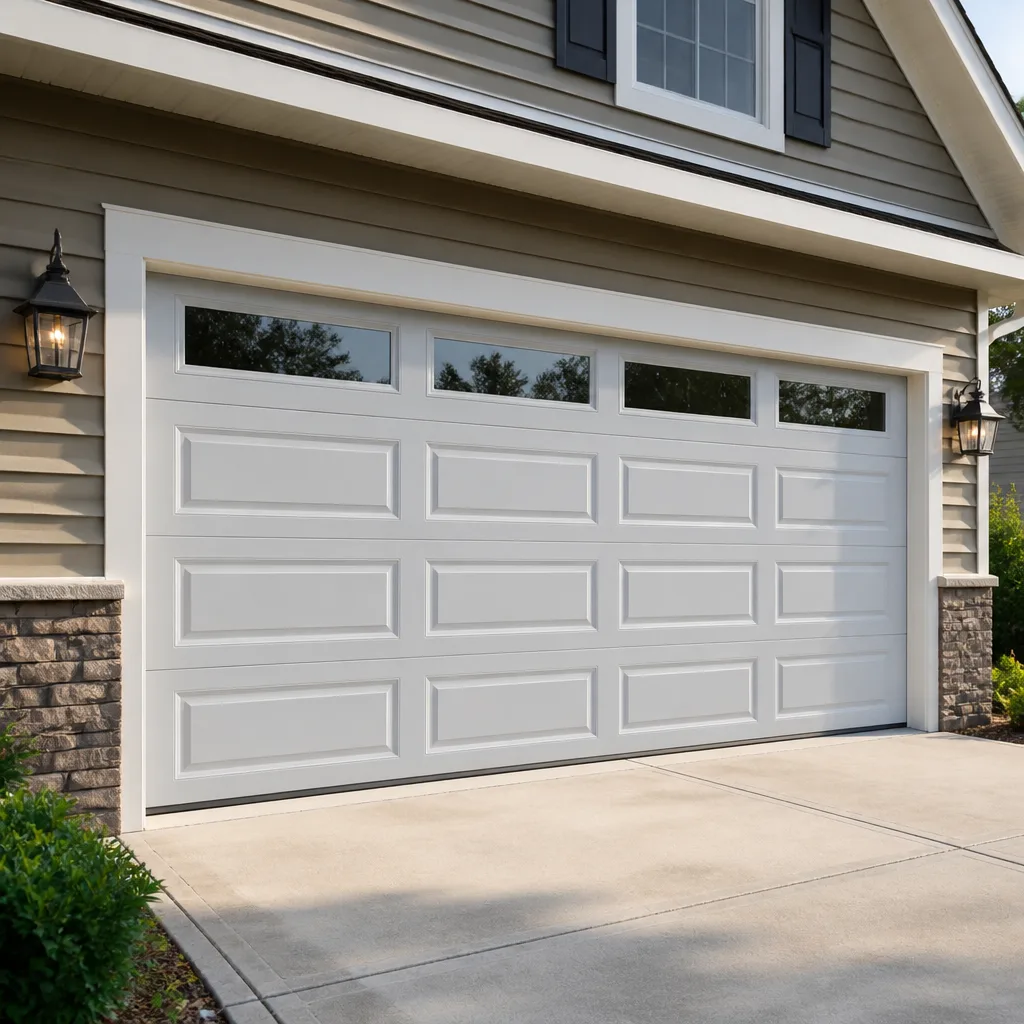 Raised-panel steel
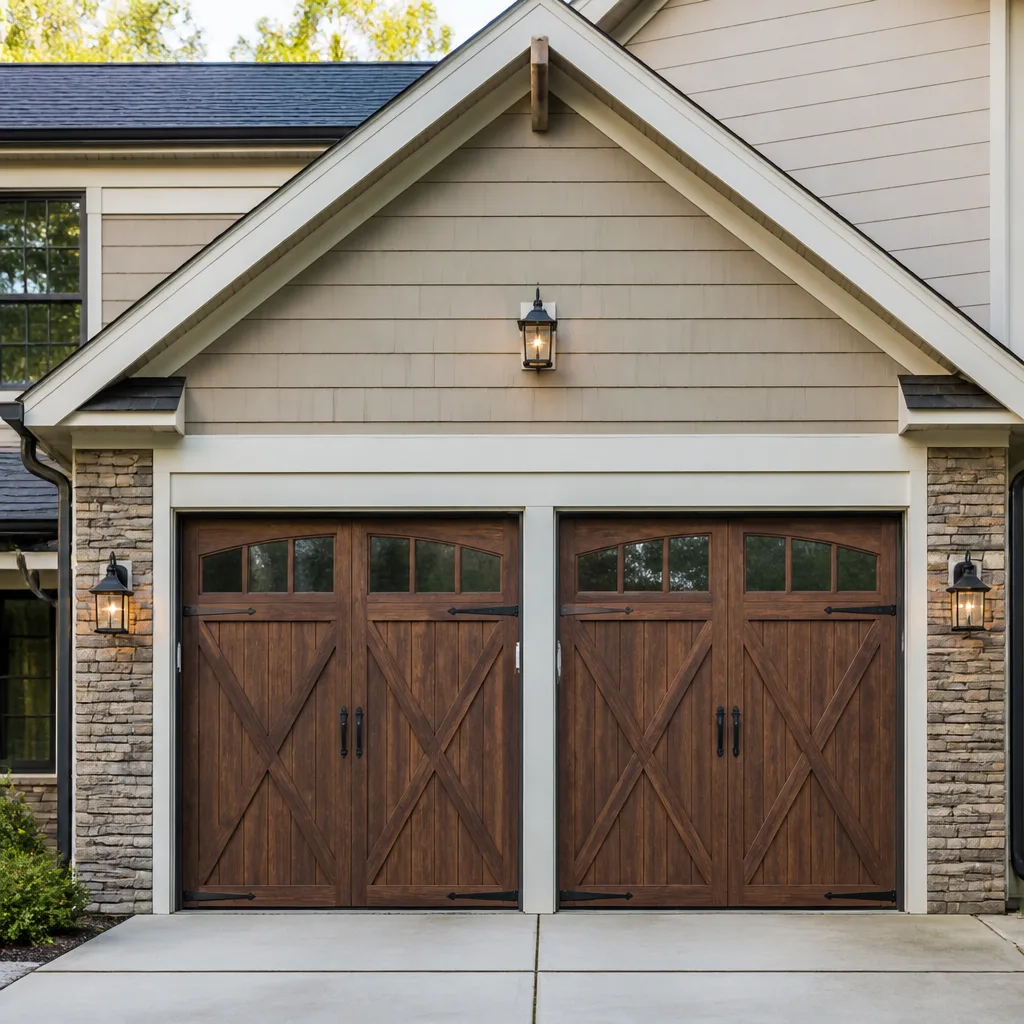 Carriage house
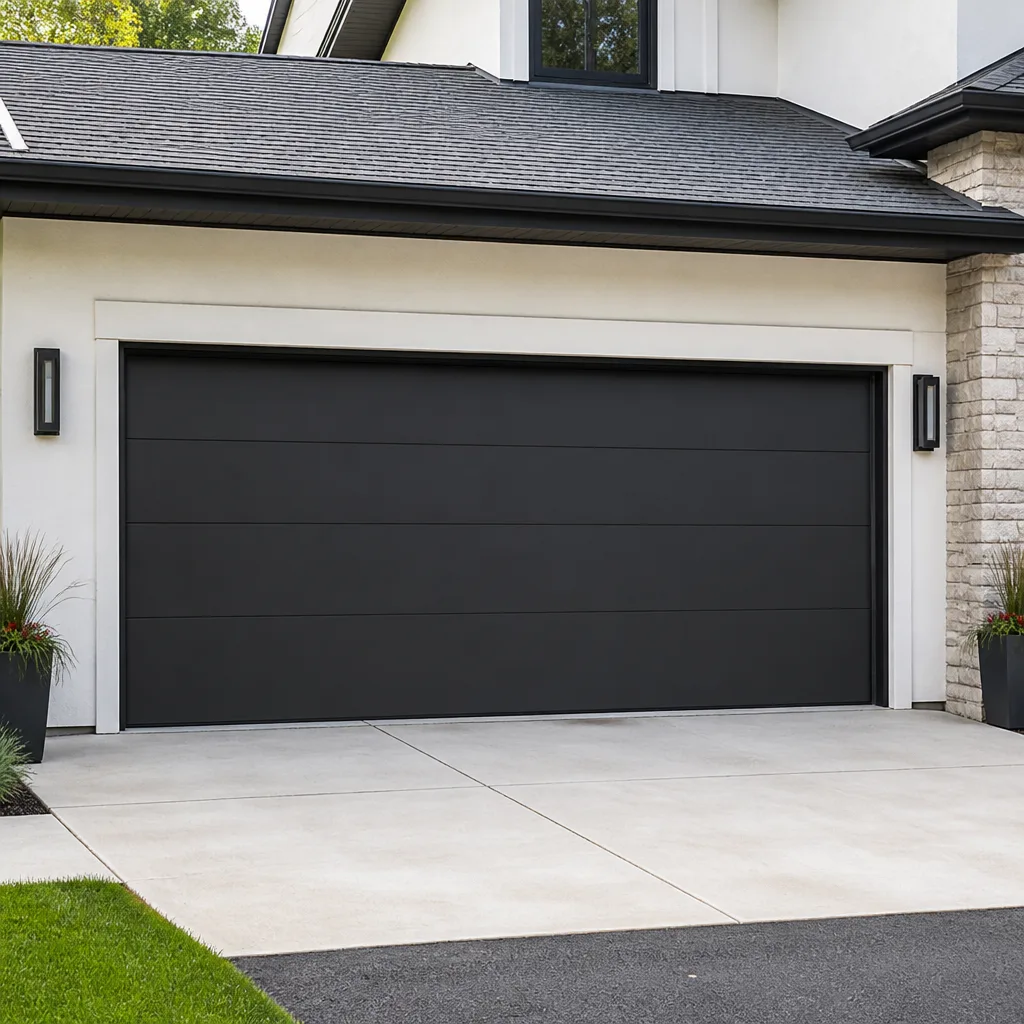 Modern flush
 Full-view glass
 LiftMaster openers
 Chamberlain openers
Full 25-point door and opener safety check with every visit - springs, cables, rollers, tracks, and your LiftMaster or Chamberlain opener included
You get a price before we start. It does not change when the pro arrives.
Get your free estimateGarage Door Emergency Preparedness Guide for Commerce City Homes
Most garage door emergencies are not really about the door. They’re about the five minutes before anyone knows what to do. At 11 PM on a January night in Commerce City, a door that opens six inches and stops leaves you with a car trapped inside, the temperature dropping, and a genuine question: can you pull that red handle, or will the door come crashing down? The answer depends entirely on whether a spring is broken. This guide closes that preparation gap so you’re never making decisions under stress at midnight. We’ll cover the four most common emergencies, the manual release procedure for the openers we see most, how to secure a door that won’t close, the winter freeze problem specific to Commerce City, and what to say when you call for help.
Quick Answer
A garage door emergency in Commerce City is handled safely by doing three things in order: stop operating the door, identify whether the spring is broken (if the door feels weightless or the cable is slack, do not use the manual release), and call a trained technician. Manual release is safe on a working-spring door and dangerous on a broken-spring door. Knowing which situation you’re in before you touch anything is the difference between a manageable repair and a serious injury.
Styles & brands we work with
- Raised-panel steel
- Carriage house
- Modern flush
- Full-view glass
- LiftMaster openers
- Chamberlain openers
Table of Contents
- The Four Most Common Garage Door Emergencies in Commerce City
- How to Manually Release Your Garage Door by Opener Brand
- How to Safely Secure a Garage Door That Won’t Close
- The Commerce City Winter Emergency: When the Bottom Seal Freezes to the Ground
- What to Tell a Technician When You Call for Emergency Service
- Your One-Page Emergency Reference Card
- Why Springs Are Not a DIY Repair (And What That Means at Midnight)
- Preventing the Next Emergency: A Simple Seasonal Check
The Four Most Common Garage Door Emergencies in Commerce City
When a garage door stops working in Commerce City, the cause usually falls into one of four buckets. Recognizing which one you’re dealing with shapes every decision that follows, including whether you can safely release the door and whether you’re looking at a same-day repair or a replacement conversation.
1. A broken torsion or extension spring. You’ll hear a loud bang from the garage, and afterward the door feels impossibly heavy when you try to lift it manually. A visible gap in the spring coil confirms it. This is the most dangerous failure because the spring stores the tension that counterbalances the door’s weight. Do not lift the door and do not use the manual release. Call us.
2. A door stuck partially open or partially closed. Often caused by a broken cable, a bound track, or a bent roller. The door is in a position that leaves your home exposed. This one is a security issue and, depending on where the door is stuck, a structural one. Let garage door repair assess before you attempt to force it.
3. An opener that has failed or lost its settings. The motor runs but the door doesn’t move, or the door moves an inch and reverses, or the remote does nothing. Most of these are opener issues, not door issues, and a technician trained on your brand can usually diagnose them quickly. If the opener is the culprit, garage door opener repair is the right call, not a door replacement.
4. A door that has come off its tracks. Usually the result of hitting the door with a vehicle or a roller that has failed. The door is unsafe to operate and may be unsafe to leave hanging. This is always a same-day priority.
In our experience across Commerce City, spring failures and opener failures account for the majority of emergency calls. Knowing which of these four you’re facing tells you instantly whether the situation is a “call now” or a “call in the morning.”
How to Manually Release Your Garage Door by Opener Brand
The manual release cord is the red handle hanging from the opener rail. Pulling it detaches the door from the opener so you can lift the door by hand. It’s a simple mechanism, and on a door with intact springs it is genuinely safe. On a door with a broken spring, it is genuinely dangerous, because the door will be far heavier than you expect and can fall. Read this whole section before pulling the cord.
The first step is the same regardless of brand: with the door fully closed, try to lift it about a foot. If it lifts with one hand and stays put when you let go, the springs are intact and the manual release is safe. If it feels heavy, won’t stay up, or you hear or see any sign of a broken spring, stop and call for emergency service. Do not pull the release.
If the door passed the lift test, here is how the release procedure works for the four opener brands we see most in Commerce City homes:
- LiftMaster and Chamberlain. Both use the same red T-handle on a cord hanging from the trolley. Pull straight down firmly until you feel the trolley disconnect. To re-engage, lift the door slightly and pull the cord toward the door. LiftMaster and Chamberlain units are also the most common Wi-Fi-connected openers, so if the door won’t respond to the wall button but the app shows the opener online, the issue is usually a door sensor or a travel limit, not a mechanical failure.
- Genie. Older Genie units often use a two-piece release: a short cord and a toggle. Locate the toggle on the trolley and pull it down and toward the door. Newer Genie models use the standard red handle. Re-engagement is the same as LiftMaster: raise the door slightly and pull the cord toward the door.
- Raynor. Raynor openers typically use a red handle on a chain-driven trolley. Pull straight down until you hear the click, then test the door by hand. Raynor also makes the door itself in many Commerce City homes, and if you know your door is a Raynor, tell the technician on the call; it speeds up parts decisions.
- Older Craftsman units. Many use a red or black handle on a chain trolley, with some variation in shape by year. The principle is the same: pull down firmly, listen for the disconnect, then test the door by hand.
The spring-broken caution
The manual release procedure above is written for a door with intact springs. If the spring is broken, the door’s weight is no longer counterbalanced. It may be 150 to 300 pounds depending on the door. Never pull the manual release on a door with a broken spring. We’ve seen what happens when homeowners try, and it is not a risk worth taking. A trained technician handles the release, secures the door, and replaces the spring in the correct sequence.
How to Safely Secure a Garage Door That Won’t Close
A door stuck open is a security problem and a weather problem at the same time. In Commerce City, the answer is not to force the door down. Forcing a stuck door can bend the track, snap a cable, or damage the opener’s limit settings, turning a 90-minute repair into a full-day one. What you want is a temporary measure that keeps the door in place without creating a bigger problem.
Here’s what actually works:
- Vice grips on the vertical track above the bottom roller. Clamp a pair of locking pliers on the track just above a roller so the door can’t slide down. This is the most reliable temporary hold if the door is fully open and the springs are intact.
- A C-clamp on the track on both sides. Same idea, slightly more secure against slippage than vice grips on a smooth track.
- A car parked directly in front of the door. Only if the door is fully open and low enough that a vehicle blocks the opening. This keeps people out but doesn’t stop the door from coming down on its own, so pair it with a clamp.
- Cord or a strap through the track and around a roller. A last resort if nothing else is available.
What doesn’t work, despite being popular advice online:
- Wedging a board or brick under the door. The door’s weight can crush it, and the door can still slide down.
- Propping the door with a broom or mop handle. Same failure mode, with a sharper edge.
- Tying the door to the track with string or rope. The string will fail under the door’s weight.
- Taping the photo-eye sensors up or down. Bypassing the safety system is how doors close on people and pets.
Once the door is temporarily held, call us and describe the situation. A door stuck open in Commerce City is a same-day priority for us, and we’ll get a technician to you to fix the underlying cause. If you’re unsure whether your temporary hold is safe, don’t leave the garage unattended.
The Commerce City Winter Emergency: When the Bottom Seal Freezes to the Ground
This is the one that catches people off guard. Commerce City winters bring snow that melts, refreezes, and pools along the garage apron. That water finds the bottom seal, freezes solid, and welds the door to the concrete overnight. In the morning the opener tries to lift, the door doesn’t move, and the opener keeps pulling against a door that’s frozen in place. The result is either a stripped gear in the opener, a snapped cable, or a bent bottom section.
The safe response is to stop running the opener the moment you realize the door isn’t lifting freely. Then:
- Clear the snow and standing water from the apron with a shovel or broom, not with a hose or hot water, which will refreeze.
- Look at the bottom seal for visible ice. If you see a solid line of ice under the seal, the door is frozen.
- Break the bond gently with a plastic ice scraper or the handle of a broom, working from one end of the seal to the other. Never use a metal tool or a hammer; you’ll tear the seal or score the concrete.
- If the seal is frozen to the point that gentle pressure doesn’t break it, leave it and call us. A frozen door is a repair, not a force-it situation, and forcing it can damage the cable.
Prevention on the front end is straightforward: after any snow or freezing rain in Commerce City, sweep or shovel the apron before it refreezes overnight, and check the bottom seal for cracks or hard spots that let water in. A stiff, worn seal holds water against the concrete and makes freezing more likely.
What to Tell a Technician When You Call for Emergency Service
When you call for emergency garage door service, four pieces of information cut diagnosis and response time in half. Have them ready before you dial, or read them off the reference card covered in the next section.
1. The door’s current position and whether it will move. “It’s fully closed and won’t open” is a different call than “it’s halfway up and stuck.” Describe where the door is physically and whether the opener still runs.
2. Whether you hear or see any sign of a broken spring. The loud bang, a visible gap in the coil, a door that feels weightless. This single piece of information tells a trained technician whether the call is a spring repair or something else, and that changes what he brings and how he approaches the door on arrival.
3. The brand of the door and the opener. If you know the door is a Clopay or Amarr and the opener is a LiftMaster or Chamberlain, say so. It sounds trivial, but our technicians are factory-familiar with the eight major brands we service, and knowing yours before we arrive means we can diagnose faster and source the right parts without a second trip.
4. Whether the door is open to the street (security) and whether there’s a car trapped inside. Both speed up how we prioritize. A door stuck open on a Commerce City street is a same-day call; a car trapped inside matters too, because it changes how you’ll need to get to work in the morning.
That’s it. Four pieces of information, two minutes on the phone, and the technician arrives already knowing which of the four common emergencies he’s walking into. We offer free estimates in Commerce City, and we can work with your schedule on the repair itself.
Your One-Page Emergency Reference Card
The single most useful thing you can do right now, before you need it, is print an emergency reference card and tape it to the inside of the garage door frame. When the door fails at 11 PM, you won’t be searching your phone for a number. You’ll be reading it off the wall.
Here is the format we recommend. Adapt the numbers and details to your home, print it, and keep it in the garage:
- Top of card, in large type: Commerce City Garage Door Repair Co – Emergency Garage Door Service: (855) 337-1961
- Door brand and model: (fill in from your door or opener)
- Opener brand and model: (fill in)
- Year the door and opener were installed, if known: (fill in)
- Spring type: Torsion (mounted on a bar above the door) or Extension (two springs running along the horizontal tracks)
- Manual release location: Red handle on the opener trolley rail, above the door
- Stop-do-not-touch rule: Never pull the manual release if the door feels heavy or a spring is broken.
- Nearest intersection: (fill in – speeds up response)
The card takes five minutes to fill in and saves real time on the call. The door brand and opener brand are the highest-value lines; if you don’t know them, check the sticker on the back of the opener motor housing and the inside of the door panel. If you can’t find them, our technicians can identify both when they arrive, but knowing them in advance means the right parts come with the call.
A fixed copy of the same card lives in the cab of every technician’s truck. This is the kind of preparation that turns an emergency from a crisis into a scheduled repair.
Why Springs Are Not a DIY Repair (And What That Means at Midnight)
Torsion springs and extension springs store enormous energy. A torsion spring on a standard two-car garage door is wound to hundreds of pounds of tension, and that tension is what holds the door up. When the spring breaks, the stored energy is released in an instant. When a homeowner tries to replace one, the danger isn’t the broken spring; it’s the new one being installed without the correct winding bars and the correct turns, which can release that stored energy at the person holding the bar.
We handle spring repair as a dedicated specialty, not as a general handyman task. That means technicians trained specifically on high-tension spring work, the correct winding bars, and the correct number of turns for the door’s weight. A matched pair of springs is almost always replaced together, because a new spring paired with an old one will carry an uneven load and fail early. That’s why we quote a single spring and a pair separately; they’re different jobs at different costs, and quoting one range for both would be misleading.
What that means at midnight: if your door has a broken spring, the safe move is to leave the door completely alone, secure it if it’s stuck open, and call. Do not attempt to replace the spring, do not cut the old spring out with a grinder, and do not pull the manual release. Springs are not a DIY repair. They’re a call to a trained technician, and in Commerce City that call gets the door fixed the same day in most cases.
If the spring repair reveals that the door itself is at end of life (a bent panel, a rusted bottom section, a door older than the rest of the house’s exterior), the same team that repairs springs also handles a full garage door installation. You won’t need to source a second contractor.
Preventing the Next Emergency: A Simple Seasonal Check
Most of the emergencies in this guide are preventable with a ten-minute check a few times a year. Here’s the routine we suggest for Commerce City homes:
- Test the manual release every few months. Pull the cord, lift the door by hand, and confirm it lifts smoothly and stays up. Re-engage the trolley. If it feels heavy or won’t stay up, call us; that’s an early sign of spring wear.
- Look at the springs. A visible gap in a torsion spring or a stretched extension spring means it’s time for replacement, not a wait-and-see.
- Check the bottom seal before winter. A cracked or stiff seal holds water against the concrete and freezes. Replace it before the first hard freeze.
- Test the photo-eye sensors. Wave an object in front of each sensor; the door should reverse. If it doesn’t, the safety system needs service.
- Listen to the opener. A new grinding, clicking, or stuttering sound is usually a gear or bearing issue that’s cheaper to fix now than after it fails.
If anything on that list feels off, call us. A free estimate on an early problem is a lot cheaper than an emergency repair on a failed one, and it’s the whole point of a preparedness guide: the goal is not to know what to do at midnight. It’s to never need to.
Common Mistakes to Avoid
- Pulling the manual release on a door with a broken spring. The door will be far heavier than expected and can fall. Test the door by hand first, and if it feels heavy, don’t touch the release. Call us instead.
- Running the opener repeatedly against a door that won’t move. Every cycle against a stuck door stresses the opener’s gear and motor. In Commerce City winters, a frozen bottom seal is the most common trigger; stop running the opener the moment you realize the door isn’t lifting freely.
- Forcing a door that’s frozen to the ground. Metal tools, hammers, and hot water all make the problem worse. Use a plastic scraper and gentle pressure, or leave it for us.
- Wedging a board, brick, or broom under a stuck-open door. The weight of the door crushes these props and the door can still come down. Use locking pliers or a C-clamp on the track instead.
- Taping up or disabling the photo-eye sensors to get the door to close. This bypasses the safety system that stops the door on people and pets. It’s the most dangerous shortcut in the book.
- Trying to replace a spring yourself. High-tension springs require winding bars and precise turn counts. Springs are not a DIY repair, and the risk of injury is real.
- Not knowing your door and opener brand when you call. Your door might be a Raynor and your opener a Genie, or a Clopay door with a LiftMaster opener. Knowing both speeds up parts sourcing and diagnosis. Check the sticker before you dial.
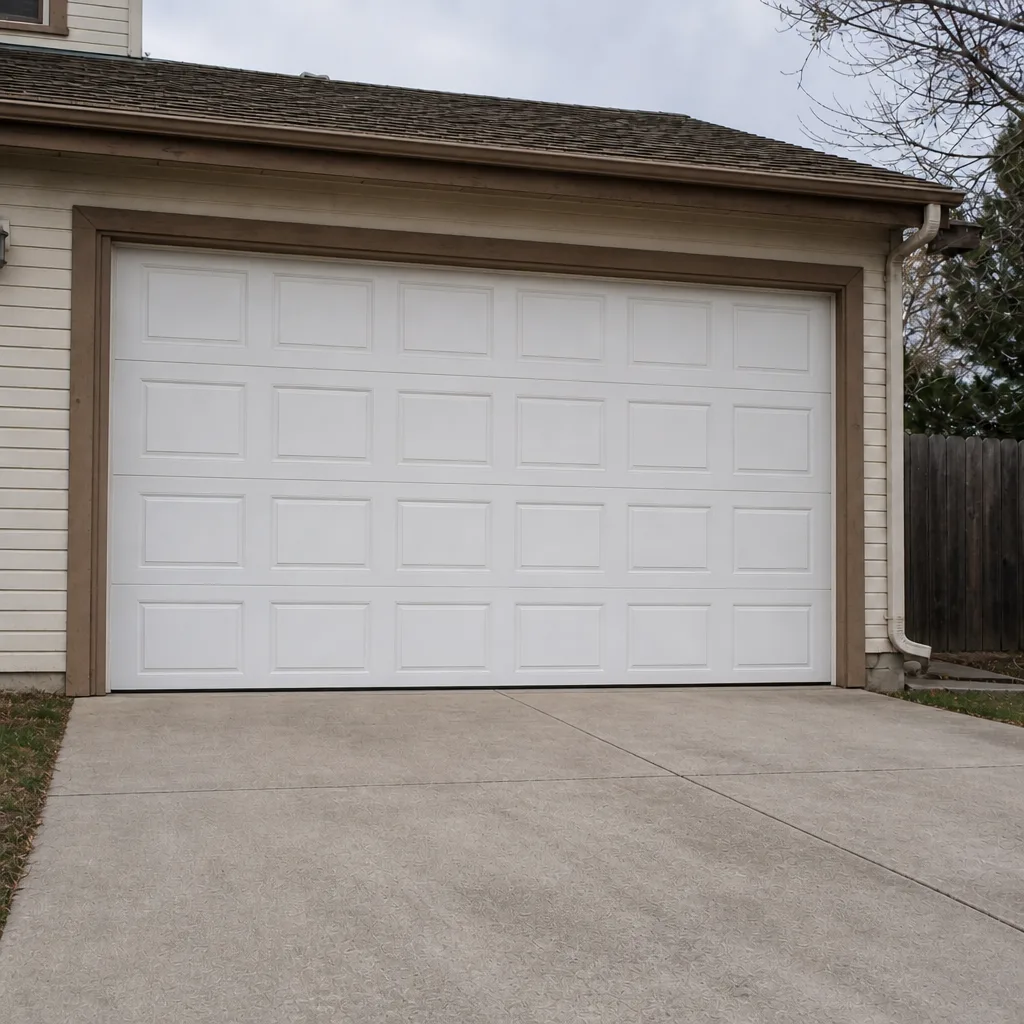
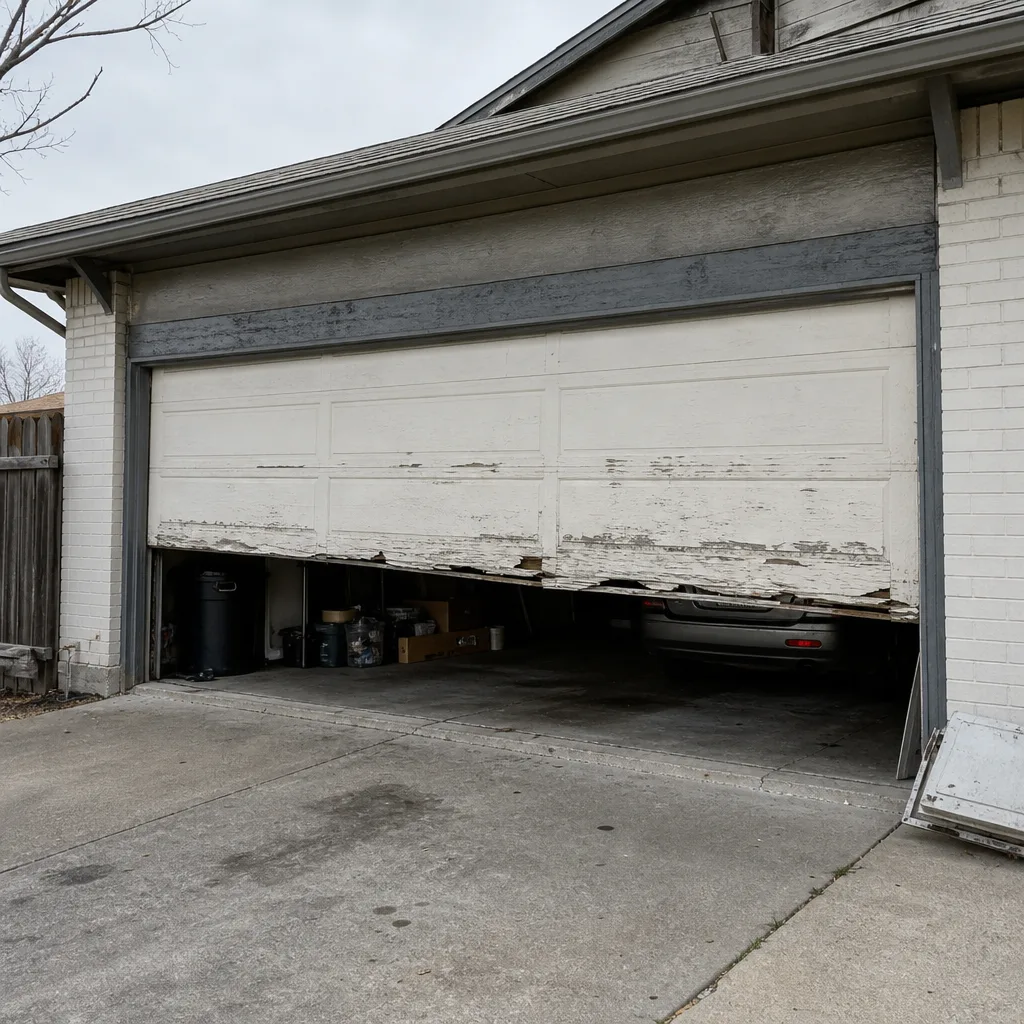
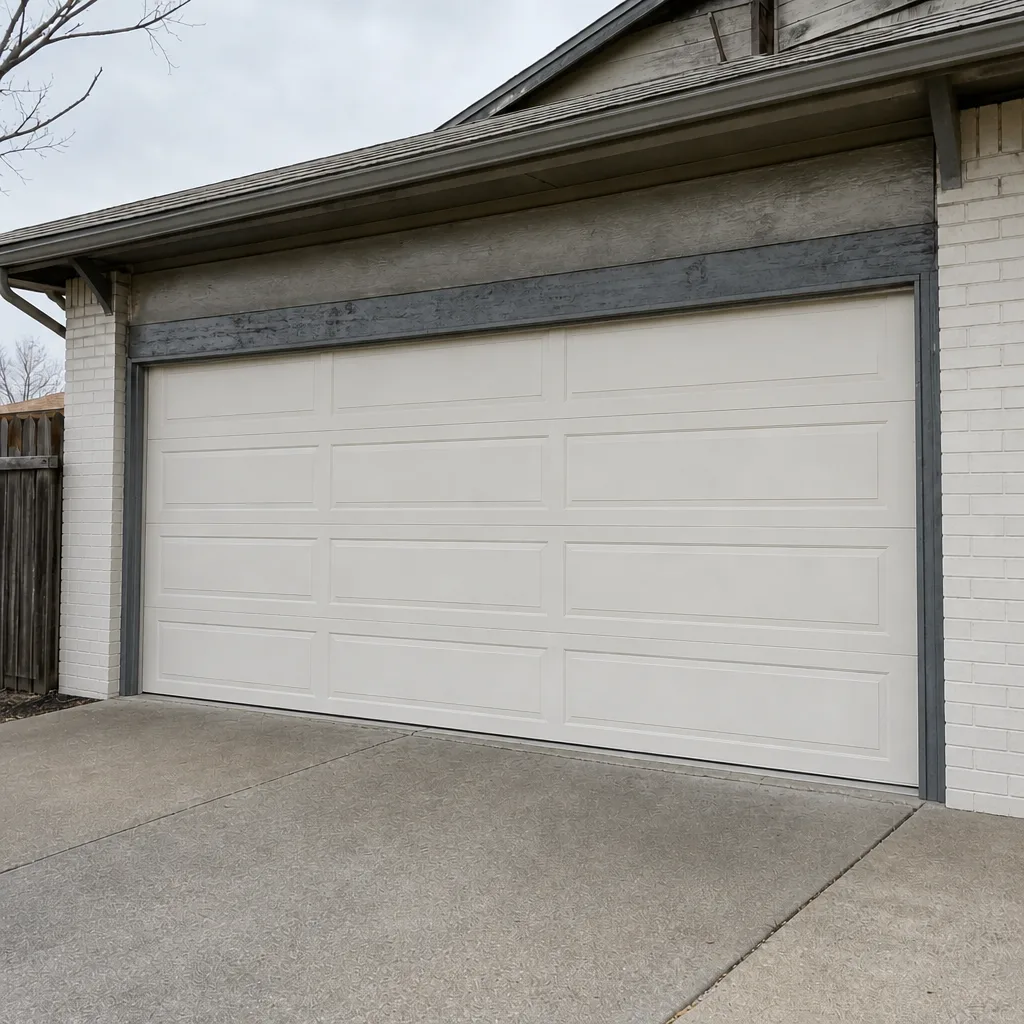
See the difference
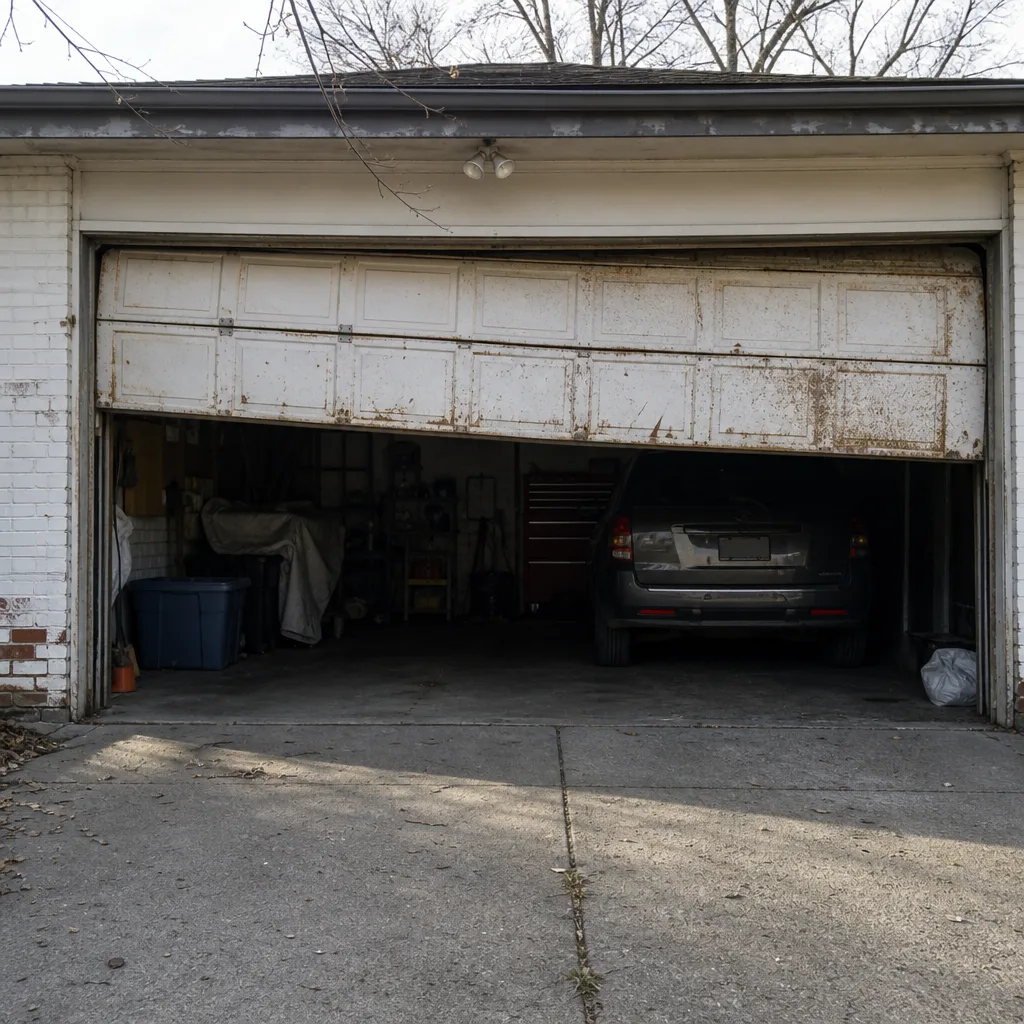 Before
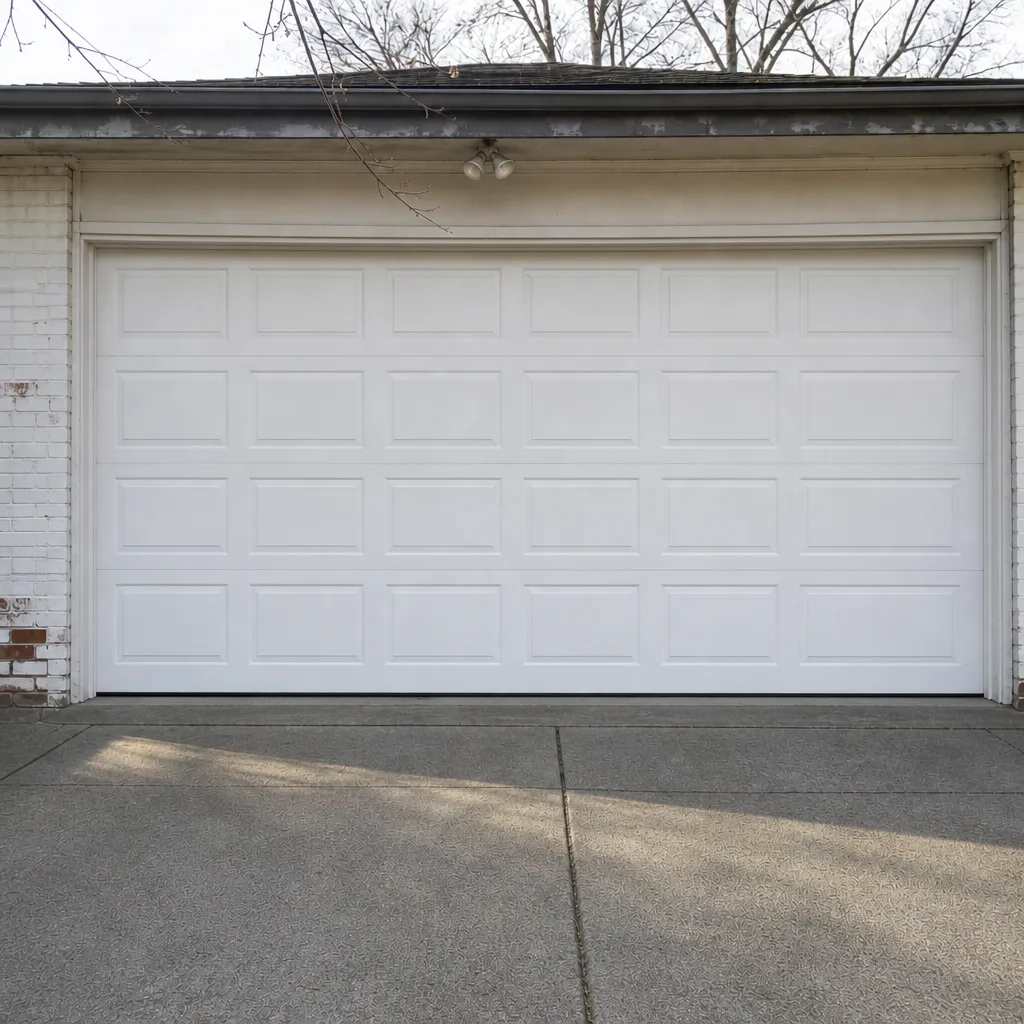 After
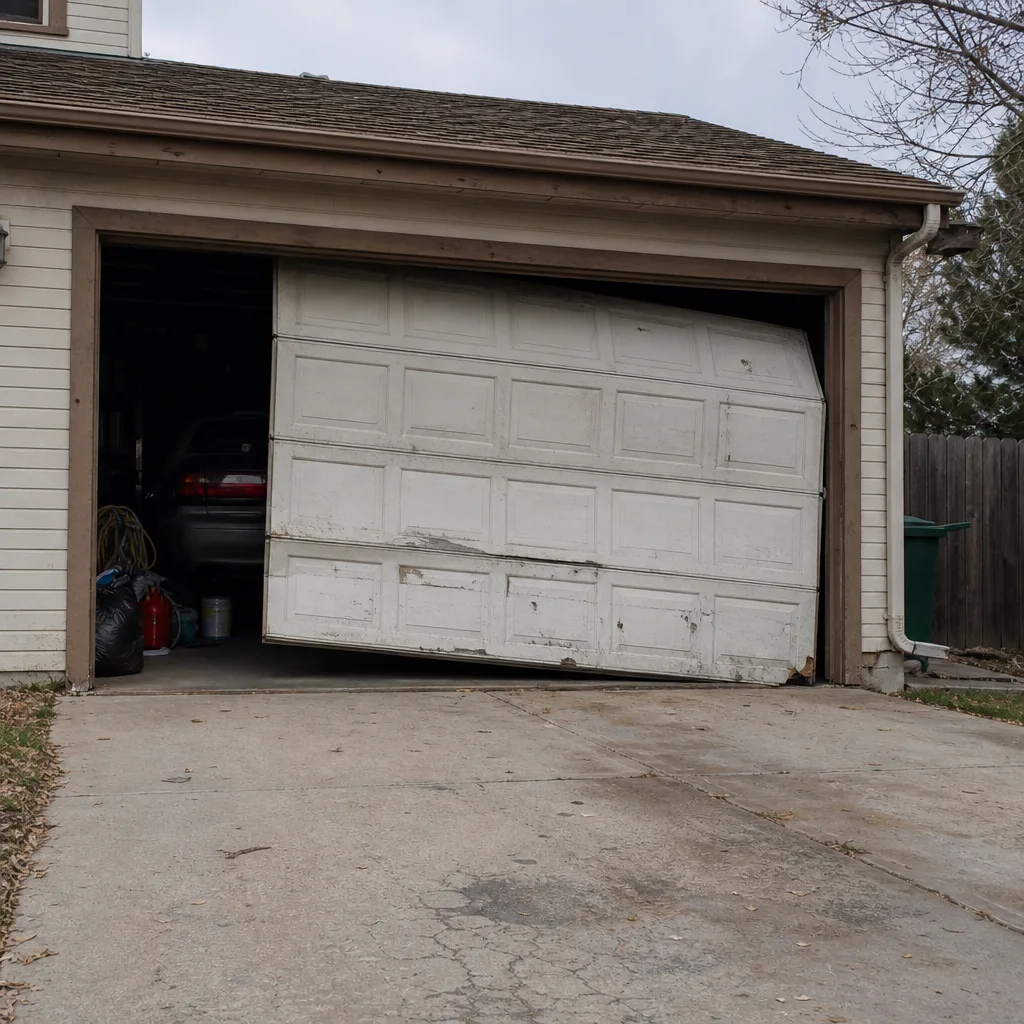 Before
 After
 Before
 After
When to Call a Professional
Call a professional for any of these: a broken spring (always), a door stuck open to the street, a door off its tracks, a cable that has snapped or gone slack, an opener that runs without moving the door, or a door that reverses when it should close. Call us for anything on that list. Commerce City Garage Door Repair Co offers free estimates in Commerce City, and we’ll walk you through the situation on the phone before we arrive. Our technicians have up to 15 years of experience and are factory-familiar with LiftMaster, Chamberlain, Genie, Clopay, Amarr, Wayne Dalton, Craftsman, and Raynor, so we can diagnose your door and your opener in the same visit. For anything on this list, call (855) 337-1961.
Frequently Asked Questions
No. Do not pull the manual release on a door with a broken spring. The spring is what counterbalances the door’s weight, and without it the door can weigh 150 to 300 pounds and fall without warning. Test the door by hand first; if it feels heavy or won’t stay up, leave it and call a technician. Call (855) 337-1961 for emergency service.
Emergency garage door service in Commerce City typically costs more than a scheduled repair because of the after-hours timing, and the exact price depends on the failure. A broken spring is quoted by single spring or matched pair; a stuck door is quoted after diagnosis. The written estimate sets the final price before any work starts. Call (855) 337-1961 for a free estimate – the price is agreed before we begin.
A torsion spring is mounted on a bar above the door and twists to provide lift; it’s the most common setup on modern doors. An extension spring stretches along the horizontal track on each side. Both store high tension and both require a trained technician to replace safely. Never attempt either yourself.
Use a pair of locking pliers or C-clamps on the vertical track just above a roller to hold the door in place. Do not use a board, brick, or broom propped under the door; the door’s weight can crush these. If the door is stuck open to the street, call us for same-day service in Commerce City.
Clear the snow and standing water, then break the ice bond gently with a plastic scraper or broom handle. Never use metal tools or hot water. Stop running the opener the moment you realize the door is frozen; continued operation can damage the opener or snap a cable. Call us if gentle pressure won’t free it.
We’re factory-familiar with eight of the most widely installed brands: LiftMaster, Chamberlain, Genie, Clopay, Amarr, Wayne Dalton, Craftsman, and Raynor. That covers most of the openers and doors in Commerce City homes. If you’re not sure of your brand, check the sticker on the opener motor housing; if you can’t find it, our technicians will identify it on arrival.
The Bottom Line
Garage door emergencies in Commerce City come down to a small number of decisions made under pressure. Know whether your springs are intact before you touch the manual release. Secure a stuck-open door with clamps, not boards. Stop running the opener the moment a winter freeze fights back. Print the reference card and have four pieces of information ready before you dial. And remember the through-line: springs and high-tension components are not DIY work, and a trained technician is faster, safer, and usually cheaper than a forced repair. Our technicians have up to 15 years of experience and are factory-familiar with the brands in Commerce City homes. If you need Commerce City Garage Door Repair Co for an emergency repair, a spring, an opener, or a full replacement, we’re the one call. Free estimates on every job, and the price is quoted and agreed before any work starts.
Call (855) 337-1961 for a free estimate or for emergency garage door service in Commerce City. One call, full solution, back up and running.
Written by the team at Commerce City Garage Door Repair Co.